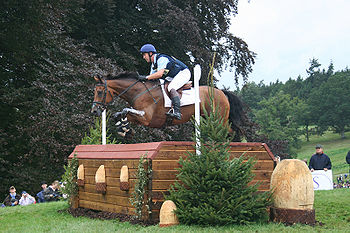
This is the page that you will learn about english riding diciplines. The three main ones are cross-country , show jumping and dressage. We are learning about show jumping but dressage is nice and classy and cross-country is jumping high outside and running a lot and the courses can last up to 8 minutes.
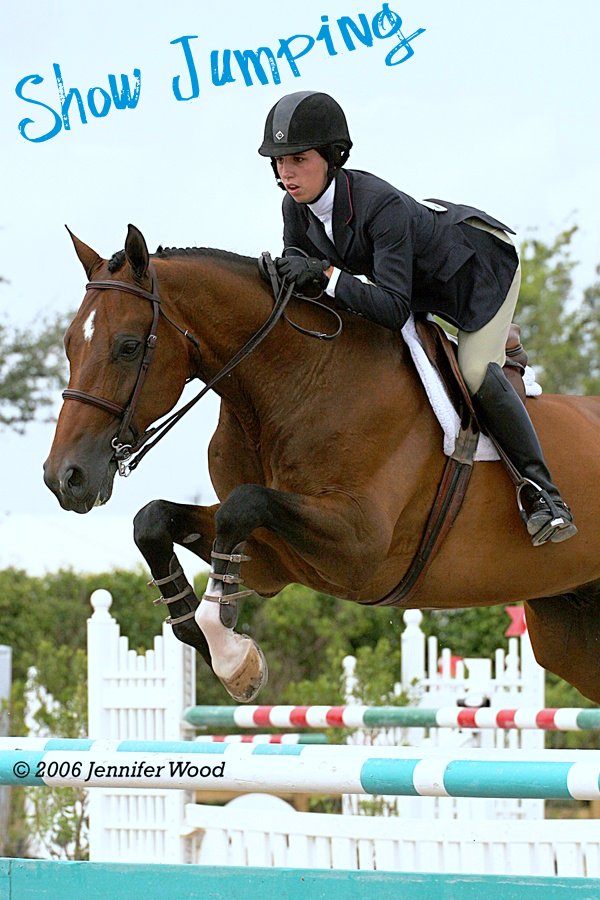
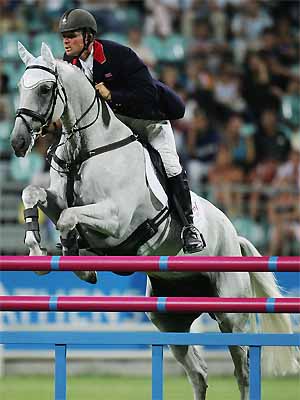
Show jumping ,also known as "stadium jumping" or "jumpers," is a member of a family of English riding equestrian events that also includes dressage, eventing, hunters and equitation. Jumping classes are commonly seen at horse shows throughout the world, including the Olympics. Sometimes shows are limited exclusively to jumpers, sometimes jumper classes are offered in conjunction with other English-style events, and sometimes show jumping is but one division of very large, all-breed competitions that include a very wide variety of disciplines. Jumping classes may be governed by various national horse show sanctioning organizations, such as the United States Equestrian Federation in the USA. However, international competitions are governed by the rules of the Fédération Équestre Internationale (FEI).
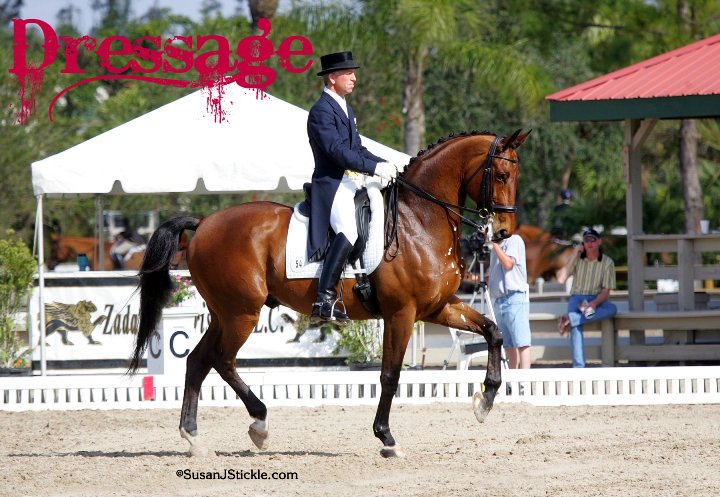
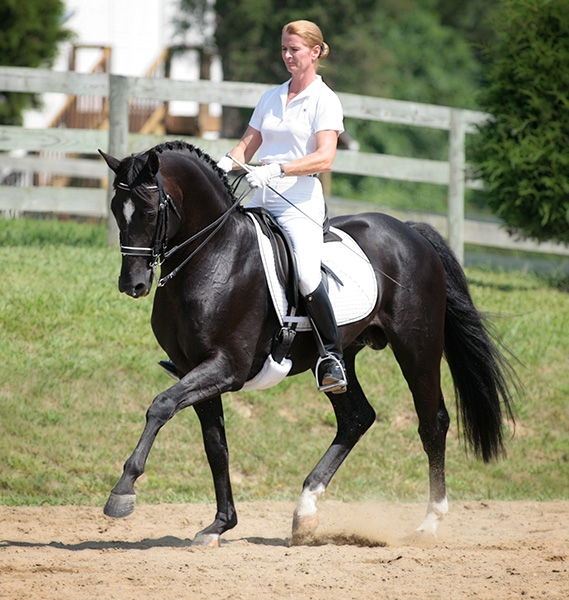
Dressage (a French term, most commonly translated to mean "training") is a path and destination of competitive horse training, with competitions held at all levels from amateur to the Olympics. Its fundamental purpose is to develop, through standardized progressive training methods, a horse's natural athletic ability and willingness to perform, thereby maximizing its potential as a riding horse. At the peak of a dressage horse's gymnastic development, it can smoothly respond to a skilled rider's minimal aids by performing the requested movement while remaining relaxed and appearing effortless. Dressage is occasionally referred to as "Horse Ballet" (cf. nl:Dressuur). Although the discipline has ancient roots, dressage was first recognized as an important equestrian pursuit in the West during the Renaissance. The great European riding masters of that period developed a sequential training system that has changed little since then. Classical dressage is still considered the basis of trained modern dressage.
Early European aristocrats displayed their horses' training in equestrian pageants, but in modern dressage competition, successful training at the various levels is demonstrated through the performance of "tests" of prescribed series of movements within a standard arena. Judges evaluate each movement on the basis of an objective standard appropriate to the level of the test and assign each movement a score from zero to ten - zero being "not executed" and 10 being "excellent". A score of 9 is considered "very good" and is considered a particularly high mark, while a competitor achieving all 6s (or 60% overall) should be considering moving on to the next level.
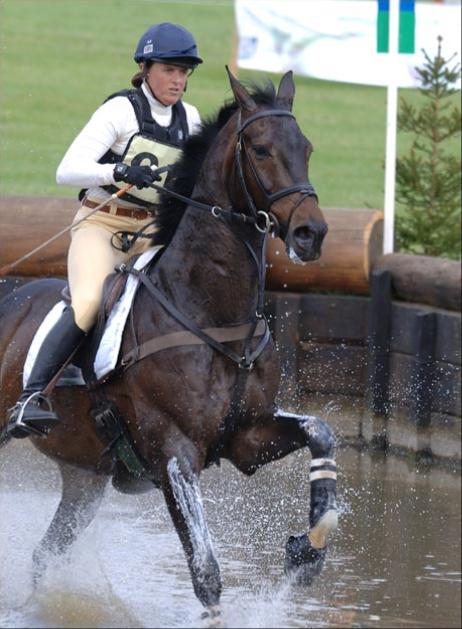
Cross country equestrian jumping is an endurance test, and is one of the three phases of the sport of eventing; it may also be a competition in its own right, known as hunter trials or simply "cross-country" - these tend to be lower level, local competitions.
The object of the endurance test is to prove the speed, endurance and jumping ability of the true cross-country horse when he is well trained and brought to the peak of condition. At the same time, it demonstrates the rider's knowledge of pace and the use of this horse across country.